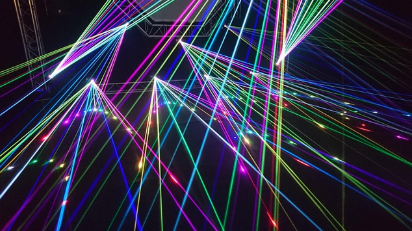
Why is there a huge difference between stage laser lights used in concerts and those used in bars and weddings? In fact, its classification has clear standards. By dividing it into 4 dimensions, you can quickly choose the one suitable for the scenario and avoid waste.
According to power, it can be divided into low power (≤500mW), medium power (500mW–2W), and high power (>2W). Low power is suitable for small commercial performances, weddings, and KTVs, with soft and non-glare beams; medium power is suitable for bars and small theaters, which can create basic dynamic effects; high power is used for large-scale concerts and cultural tourism light shows, which need to comply with national Class 3B or Class 4 safety standards and be operated by professionals.
According to color, it ranges from single color (red/green/blue), dual color to full-color mixing system. Full-color laser lights can present tens of millions of colors through RGB three-color superposition, which is the mainstream choice for stages currently. According to the control method, there are automatic mode (with built-in fixed patterns) and DMX512/ILDA protocol control mode. The latter can be linked with the lighting console to achieve precise synchronization of beams with music and performances.
According to the application scenario, the fixed installation type is suitable for long-term deployment in theaters and theme venues; the mobile performance type emphasizes light weight and easy disassembly and assembly, suitable for tour performances; the outdoor landscape type has a protection level of IP65 or above, which can be used for building projection and water screen performances, fearless of wind and rain.